
On Glow, solar farms compete to produce the maximum number of carbon credits relative to their electricity revenues. In order to participate and earn Glow token incentives, each farm posts a protocol deposit that serves as the foundation for competitive redistribution. High-performing farms recover their deposits faster and capture surplus from underperformers, while farms that consistently produce fewer carbon credits relative to their revenues forfeit portions of their deposits to higher-impact competitors.
Glow implements this redistribution mechanism via progressive vaults, ensuring a zero-sum deposit recovery competition where total farm deposits contributed always equal total deposits recovered, while individual farms experience variable deposit recovery based on performance. The system guarantees that every average farm recovers exactly what it deposited to join Glow, but farms that outcompete their peers gain access to an additional pool of forfeited assets. This "performance pool" of forfeited assets is funded entirely by underperformers, and enables competitive redistribution from low-impact to high-impact solar farms.
Farms can post protocol deposits in three assets: GCTL, GLW, or USDG. Each asset operates as a separate competition with its own performance pool. Farms depositing in GCTL compete only against other GCTL farms for recovery of GCTL tokens, GLW farms compete against GLW farms, and USDG farms compete against USDG farms. Within each competition, penalties and forfeitures from underperformers accumulate in that asset's performance pool, becoming available for redistribution to overperformers competing in the same asset class.
Distributing Deposits Across Weekly Buckets
When a farm joins Glow, it posts a protocol deposit equivalent to the net present value of its lifetime electricity revenues (denominated in USD). For example, a farm with a $100,000 protocol deposit might commit 400,000 GLW tokens valued at $0.25 per token, or 100,000 USDG tokens valued at $1.00 per token, or an equivalent amount of GCTL. The deposit denomination is always in USD, while the actual assets deposited can be USDG, GLW, or GCTL at their respective exchange rates.
Farms participate in weekly regional competitions to earn back their protocol deposit. In Glow V2, farms compete over a 100-week period, and when each farm joins Glow, its entire deposit is divided equally into 100 consecutive weekly buckets. For example, a farm joining in week 101 is active on Glow for weeks 101 through 200. If it had a $100,000 protocol deposit, it contributes $1,000 to each weekly bucket in weeks 101 through 200. Each weekly bucket contains the combined contributions from all of its active farms competing in that specific region and asset type (GLW, GCTL, or USDG). For example, week 200's GLW bucket would contain 1% of the protocol deposit for all farms that joined between weeks 101 and 200 and paid their protocol deposit with GLW tokens (Figure 1).
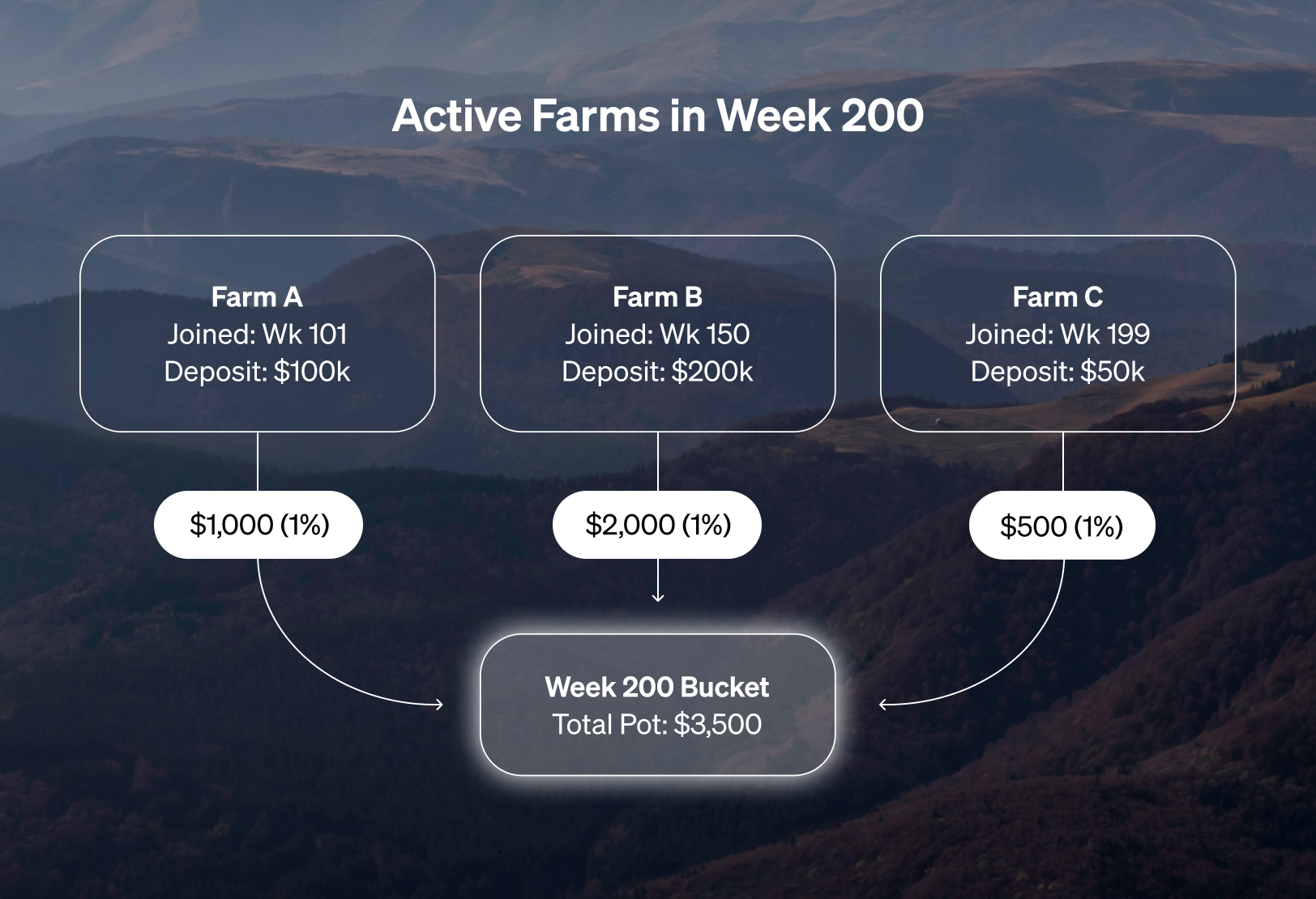
Figure 1: Farms contribute 1% of their total deposit to each active weekly bucket.
Each week, farms also contribute their expected carbon credit production to that week's bucket. The weekly competition determines how much protocol deposit value each farm recovers based on its share of carbon credit production weighted by deposit contributions:
A farm producing 10% of a bucket's carbon credits recovers 10% of that bucket's total protocol deposit value. If the farm contributed less than 10% of deposits to that bucket, it overperforms by recovering more than it put in. If it contributed more than 10%, it underperforms by recovering less than it contributed. This creates the competitive dynamic where farms with higher carbon credit production relative to their deposit contributions (revenue) recover deposits faster by claiming surplus value from farms with lower carbon-to-revenue ratios (Figure 2).
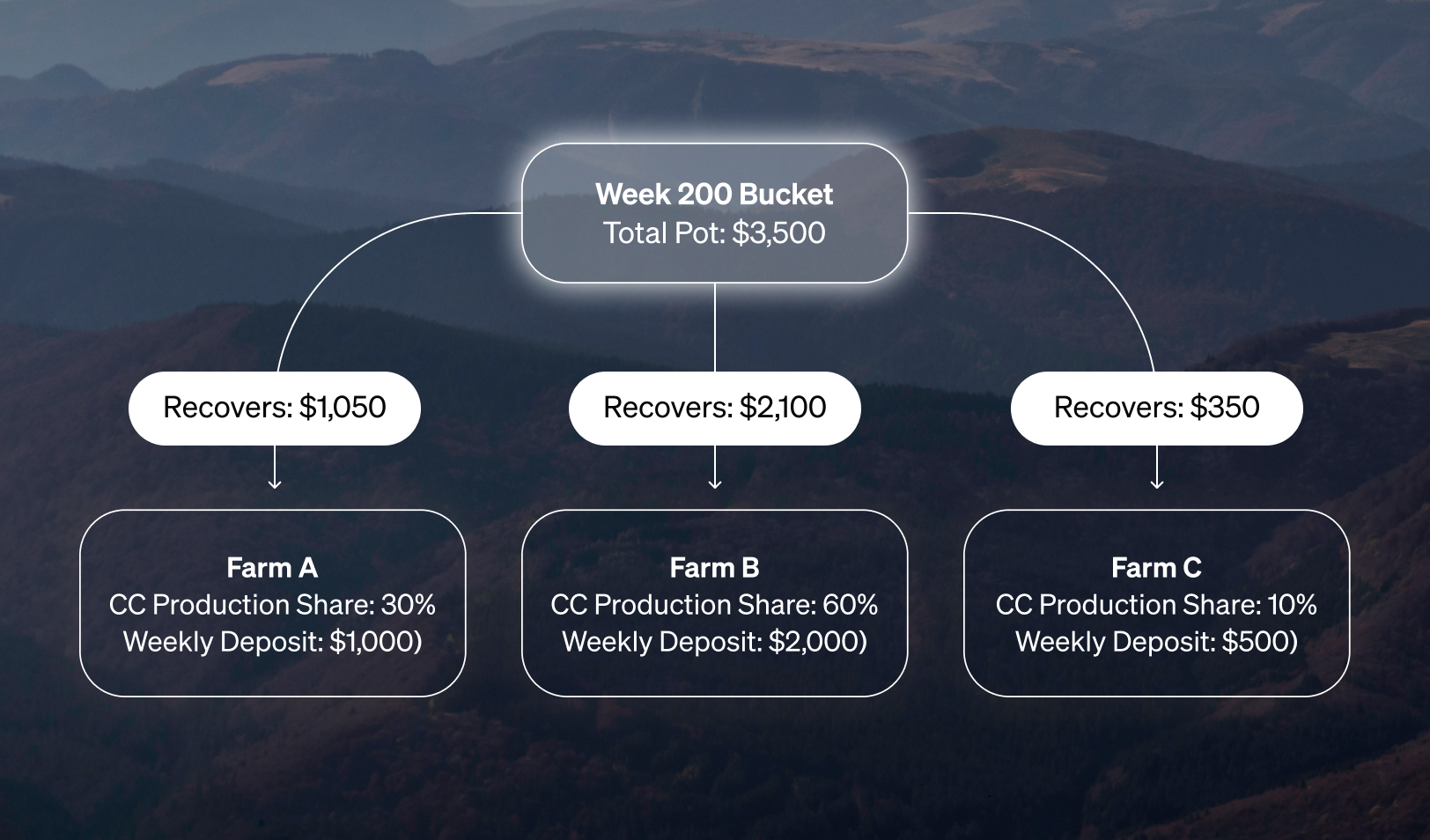
Figure 2: Deposit recovery is determined by relative carbon credit production share.
Tracking Performance
Progressive vaults track competitive performance via dynamic state updates. Each farm maintains its own vault with a locked exchange rate, while underperformer forfeitures accumulate in a shared performance pool that overperformers can eventually access.
Exchange Rate Locking
When farms deposit assets to join Glow, they lock in an exchange rate that insulates them from token price volatility throughout their participation period. This locked rate determines how much of their specific asset they recover per dollar of protocol deposit value they earn back.
A farm depositing in GLW locks in the GLW/USD rate at the moment of deposit. If GLW trades at $0.25 when the farm joins, a $100,000 protocol deposit requires 400,000 GLW tokens. The farm's personal exchange rate becomes 4 GLW per dollar (400,000 GLW / $100,000 USD). This rate remains fixed for the farm's entire 100-week participation, regardless of any GLW market price changes.
Glow tracks two values for each farm to establish this locked rate: Assets_Required (the actual tokens posted) and Protocol_Deposit (the USD value at deposit time). For the farm above, Assets_Required = 400,000 GLW and Protocol_Deposit = $100,000. The ratio Assets_Required / Protocol_Deposit defines the farm's locked exchange rate.
This mechanism ensures average performers recover exactly what they deposited in token terms. An average-performing farm depositing 400,000 GLW at $0.25 recovers exactly 400,000 GLW over 100 weeks, regardless of whether GLW trades at $0.10 or $1.00 during that period. Strong performers who access the performance pool collect at a different rate determined by the rate at which underperformers forfeited, but this only applies after fully recovering their original deposit.
State Architecture
Figure 3 below illustrates the primary state layers: individual farm state and shared pool state.
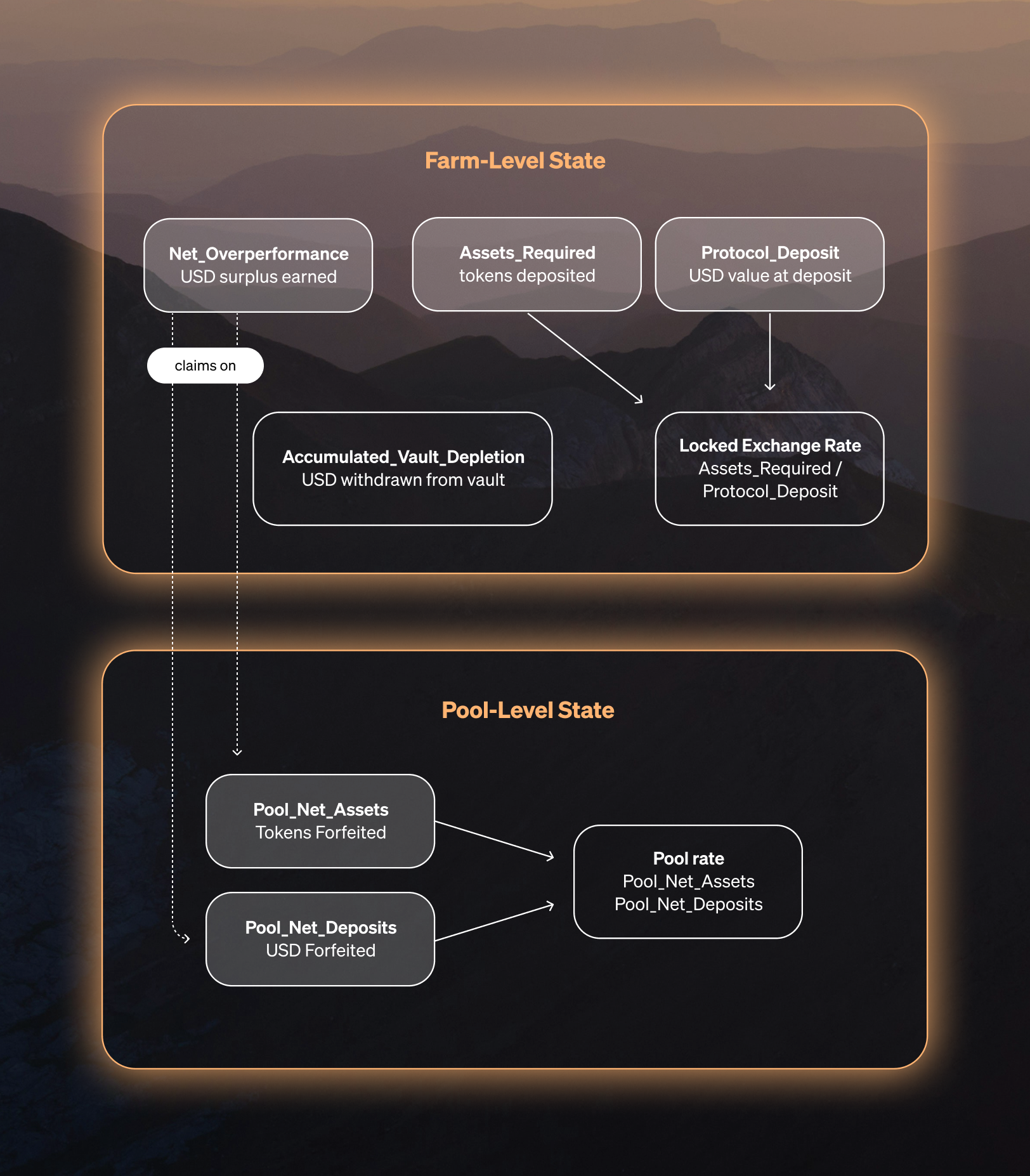
Figure 3: Progressive vault and forfeitures pool state tracking
Farm-Level State
Each farm tracks four values to manage its competitive position:
Assets_Required and Protocol_Deposit establish the farm's locked exchange rate. These values are set at deposit time and never change. They determine how many tokens the farm receives per dollar of deposit value when collecting from its own vault.
Accumulated_Vault_Depletion tracks the total protocol deposit value the farm has withdrawn from its own vault. It starts at zero and increases each week as the farm collects rewards or forfeits part of its vault to the performance pool. By the end of each farm's 100-week participation period, its Accumulated_Vault_Depletion equals the farm's original Protocol_Deposit value.
Net_Overperformance tracks surplus protocol deposit value the farm has earned from outperforming. It acts as a buffer for bad weeks and eventually becomes claims on the shared performance pool. When a farm recovers more deposit value than it contributed, the excess gets added to Net_Overperformance. A farm that contributes $1,000 to a weekly bucket and recovers $1,200 due to efficient carbon credit production increases its Net_Overperformance by $200.
Pool-Level State
Each competition maintains a shared Performance Pool with two values:
Pool_Net_Deposits tracks total deposit value (in USD) forfeited by underperformers. Pool_Net_Assets tracks the actual number of tokens forfeited, denominated in the competition's asset (GCTL, GLW, or USDG).
The ratio Pool_Net_Assets / Pool_Net_Deposits determines the pool exchange rate at which overperforming farms collect rewards after fully depleting their own vaults. This rate reflects the average locked exchange rate of all underperformers who contributed to the pool.
Farm Underperformance
If in a given week a farm recovers less deposit value than it contributed to that week's bucket, the shortfall first reduces Net_Overperformance. If Net_Overperformance cannot fully absorb the shortfall, it drops to zero and the remaining amount becomes a penalty. The penalty simultaneously increases the farm's Accumulated_Vault_Depletion and gets forfeited to the performance pool as both USD value and proportional assets.
Consider a farm with $30 Net_Overperformance that contributes $1,000 and recovers only $800. The $200 deficit first consumes the $30 buffer, dropping Net_Overperformance to zero. The remaining $170 becomes the farm's penalty. This penalty depletes $170 from the farm's own vault and sends both the USD value and proportional assets to the performance pool. As a result, the farm forfeits part of its own deposited assets, making them available for overperforming farms to claim.
The penalty assets are calculated using the farm's locked-in exchange rate:
The Penalty_Deposit (in USD) increases Pool_Net_Deposits, while the Penalty_Assets (in tokens) increases Pool_Net_Assets. The underperforming farm's Accumulated_Vault_Depletion increases by the penalty amount, meaning the farm has depleted more of its vault even though it forfeited, instead of recovering a portion of its contributed assets.
Collecting Rewards
After recovering protocol deposit value from a bucket, farms convert that value into asset rewards. The source of assets depends on whether the farm has fully depleted its own vault.
While Accumulated_Vault_Depletion is less than the original protocol deposit value, farms collect from their own vault at their locked-in exchange rate. The exchange rate is simply each farm's Assets_Required divided by its Protocol_Deposit. A farm that deposited $100,000 worth of GLW at $0.25 committed 400,000 GLW, giving an exchange rate of 4 GLW per dollar. If the farm recovers $1,000 in deposit value this week, it receives 4,000 GLW from its vault. As the farm collects, Accumulated_Vault_Depletion increases by the USD value withdrawn. This continues until Accumulated_Vault_Depletion equals the original deposit value. This guarantees that a farm recovers its deposit assets if it performs at least at the pool average.
Once Accumulated_Vault_Depletion equals the original protocol deposit value, the farm has fully depleted its own vault. At this point, the farm can only collect rewards if Net_Overperformance is greater than zero. Net_Overperformance represents claims earned by outcompeting peers, and these claims are exercised against the performance pool.
The exchange rate at which they collect rewards now becomes the pool's rate, calculated as Pool_Net_Assets divided by Pool_Net_Deposits. This rate reflects the average asset-to-deposit ratio of all underperformers who contributed to the pool. For each dollar of protocol value collected from the pool, the farm's Net_Overperformance decreases by $1, Pool_Net_Deposits decreases by $1, and the farm receives assets at the pool's exchange rate.
Collecting from the performance pool works like withdrawing from a shared pot funded by underperformers. Farms can only access the pool if they earned the right through overperformance and have completely earned back their own protocol deposit. Collection happens at the rate determined by what underperformers forfeited. Most farms complete deposit recovery by collecting primarily from their own vaults with minimal pool access. Strong performers fully deplete their vaults and then collect substantial assets from the performance pool. Underperformers never access the pool, completing participation with vaults only partially recovered due to forfeitures.
Figure 4 below illustrates each farm's weekly competition and deposit recovery process.
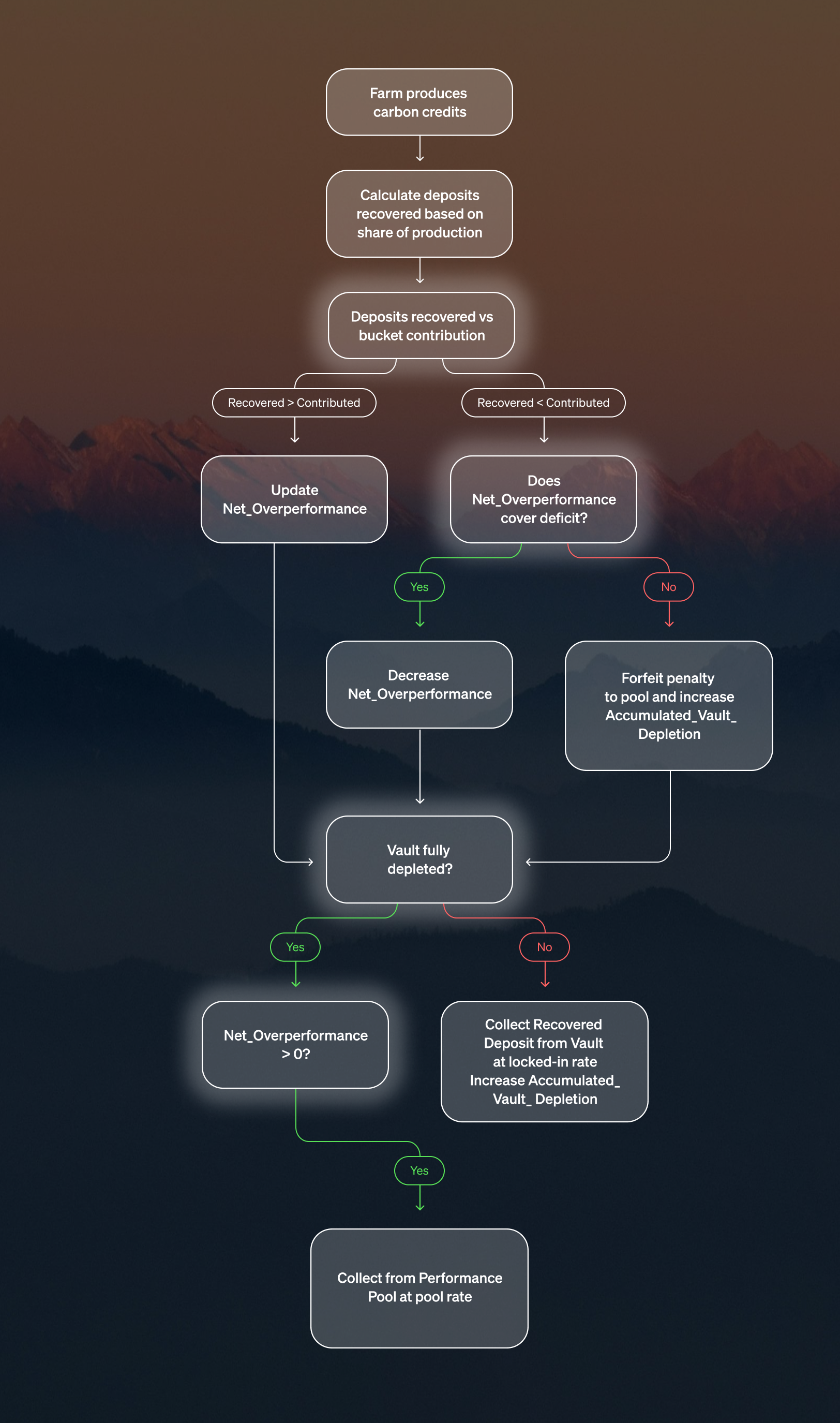
Figure 4: Control flow for weekly competition deposit recovery, forfeitures, and surplus accruals
Each week, farms produce carbon credits which determine deposits recovered based on relative competitiveness. The protocol compares recovered value to contributed value, updating Net_Overperformance or triggering penalties. Then farms collect asset rewards from either their own vault or the performance pool based on their Accumulated_Vault_Depletion and Net_Overperformance status.
Zero-Sum Balance
Progressive vaults guarantee three distinct performance-based outcomes:
- Average performers recover exactly what they deposited. A farm depositing 400,000 GLW and performing at the pool average of carbon credit production recovers exactly 400,000 GLW, regardless of price fluctuations during the 100-week period. The vault depletes at exactly the rate the farm earns back assets.
- Consistent overperformers recover deposits faster and then claim forfeitures from the performance pool. These farms fully deplete their vaults early, build
Net_Overperformancecredits through sustained outperformance, and exercise those credits against the pool at the average forfeiture rate. - Underperformers forfeit portions of their deposits throughout participation. These farms never fully deplete their vaults. The gap between their original deposit and final
Accumulated_Vault_Depletionrepresents assets forfeited to overperformers.
The system maintains zero-sum balance. Total deposits contributed equals total deposits recovered, as all forfeitures flow through the performance pool to overperformers. Every farm collects from its own vault first at its original exchange rate, eliminating asset price fluctuation risks for average performers while creating strong incentives for each farm to operate at maximum competitiveness. Farms performing at the pool average or better face no exchange rate risk, while competitive pressure ensures only the highest-impact solar production captures surplus value.
Ultimately, protocol participation becomes positive-sum for most participants (even slight underperformers), due to GLW token emissions and sustained network growth. As Glow scales with new solar projects and regional infrastructure projects, the protocol's value accrual flywheels accelerate, using competitive redistribution to drive the exponential growth of global sustainable energy production.